Editorial Team
Editor-In-Chief

Khanal has authored around 100 research publications and numerous conference papers, which he has presented at many international conferences. He is actively involved in research projects in the US and in South Asia and serves as an associate editor of the Journal of Agribusiness in Developing and Emerging Economies (JADEE) and a member of topical advisory panel of the Sustainable Food section of Sustainability journal. Khanal is an active member of various professional organizations: Agricultural and Applied Economics Association (AAEA), Southern Agricultural Economics Association (SAEA), Nepali Academics in America (NACA), and Association of Nepalese Agricultural Professionals in Americas (NAPA).
Khanal has received the Outstanding Young Scholar Award of Agricultural Finance and Management from AAEA, the Emerging Scholar Award from SAEA, the Outstanding Young Researcher Award from the College of Agriculture at TSU, and the Highly Commended Journal Article of Excellence Award from Emerald Publishers. Khanal teaches undergraduate and graduate level courses in agricultural finance, applied microeconomics, and agribusiness strategy and serves as a graduate program coordinator of the Department.
Associate Editor-In-Chief

Dr. Mentreddy teaches agricultural science courses at the undergraduate and graduate levels and advises graduate students. His current research focuses on developing cover crop-based sustainable crop management practices for vegetable and medicinal herbs in open field and agroforestry systems, evaluating low-temperature plasma as a green technology for chemical-free seed and meat safety, and improving seed germination, plant growth, and yield. As one of the Founding Members of the American Council for Medicinally Active Plants (ACMAP), he is an Ex-officio member of the ACMAP Board of Directors. He served ACMAP as the secretary, Vice President, and President/Chair since its inception, the 1890 Agroforestry Consortium, and member of various committees in the American Society for Horticultural Science. Dr. Mentreddy has several years of experience as a reviewer for various journals, funding agencies, universities, and publishers worldwide.
Managing Editors
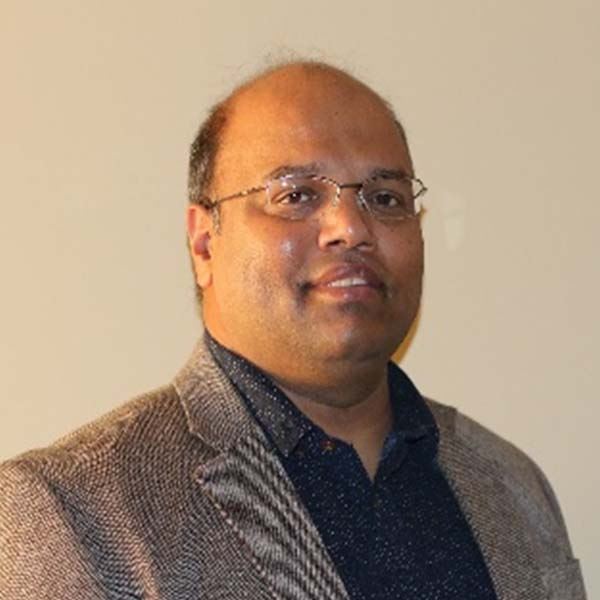
Throughout his academic career, Dr. Pokharel has secured around $10 million in research funding as a principal investigator or co-principal investigator and has published more than three dozen peer-reviewed journal articles, two book chapters, and numerous professional reports and proceedings. Dr. Pokharel had been actively engaged in community service. His work includes leading a school tree-nursery project through Forests Without Borders, a Canadian Institute of Forestry initiative in Nepal, and helping rebuild a school damaged by Nepal’s 2015 earthquake through the Nashville Nepalese Association (NNA), a nonprofit 501(c)(3) organization. In recognition of his contributions, he received the Canadian Institute of Forestry’s “Tree of Life” Award in 2013. He is an active member of the Society of American Foresters (SAF) and a life member of the Association of Nepalese Agricultural Professionals of the Americas (NAPA), the Nepal Foresters’ Association, and the Nepal Red Cross Society.

Section Editors

He also works on forage-based strategies for controlling gastrointestinal nematodes affecting pasture-raised small ruminants to address growing consumer preferences for animal products with less or no chemical drug residues. As a member of the 1890 Agroforestry Consortium, an affiliate of the North American Agroforestry Association, Dr. Temu promotes sustainable agroforestry practices, including silvopasture, grass-legume mixtures, and rotational grazing for Climate-Smart ruminant livestock production. He also assesses ecological restoration of degraded agricultural landscapes, including revegetation of utility-scale solar installations. Since joining VSU, Dr. Temu has reviewed over 60 published manuscripts for over 10 scientific journals that follow a rigorous peer-review process. He has published at least 20 peer-reviewed Journal articles and given over 20 conference presentations.
He is a board member of the Virginia Forage and Grassland Council and the Southern United States Cover Crops Council, where he also serves on research and conference committees, the American Society of Agronomy, the Crop Science Society of America, the Society for Range Management, and several other professional associations.
.jpg)
Dr. Paudyal’s research interests focus on using herd and animal level data for decision making in dairy farms. His research utilizes innovative technologies to optimize production, health, and well-being of dairy cattle.

He has collaborated on over 30 successful externally funded grants and contracts, totaling $60 million, and served as lead PI on $6 million in funding. Since 2024, Dr. Ghimire has been included on the list of the world's top 2% of scientists, as published by Elsevier and Stanford University.
He is passionate about developing sustainable agricultural techniques and training students and scientists to address challenges in sustainable soil management. Dr. Ghimire received various awards from the university and professional societies, including the Mobley Family Endowed Distinguished Award in 2024 and the Emerging Scientist Award of the Western Society of Crop Science in 2020.

Dr. Acharya has played a key role in obtaining various external funds as both Principal Investigator and Co-Principal Investigator. His current research focuses on identifying gastrointestinal nematodes, studying anthelmintic resistance, and exploring metabolomics, proteomics, and genomic strategies for disease resistance in sheep and goats. He has extensive experience in creating producer education programs, field days, webinars, fact sheets, and hands-on training sessions. He is a dedicated educator and mentor who encourages active learning, critical thinking, scientific communication, and practical skills. He has numerous publications in peer-reviewed journals and acts as a reviewer for scientific articles and grant applications.
Editorial Assistant

Dr. Aryal's academic background includes a Ph.D. in Crop and Soil Environmental Sciences from Virginia Tech, where her research focused on developing production techniques for ramps (Allium tricoccum) in Appalachia. She also holds master’s degree in environmental sciences from Tribhuvan University, Nepal and another MS degree in Biological Sciences from Eastern Illinois University, IL, USA, contributing to her deep understanding of ecosystem dynamics, climate change impacts, and agricultural sustainability. Her research contributions are well-recognized, with multiple publications and conference presentations addressing topics from mycorrhizal influence on chestnut growth to carbon sequestration and site suitability modeling for forest farming.
A committed advocate for environmental conservation, Dr. Aryal actively engages in stakeholder outreach, community education, and interdisciplinary collaboration, ensuring her research addresses practical needs and contributes to sustainable agricultural practices. Her work has been supported by various grants and scholarships, underscoring her commitment to impactful, evidence-based research in environmental and agricultural sciences
Technical Support
Amod Karki
Dharma Raj Katuwal (Editorial and Production Support)